Fog Eaters
When environmental toxicologists on the California coast discover high levels of mercury in mountain lions, a hunt through the food web reveals a global story of pollution.
Summary
Fog Eaters follows researchers on California's coast as they trace an unexpected pollution trail, told partly through the voice of the fog itself, which addresses mercury as a "passenger" it has been forced to carry. The story begins with a study of mountain lions, whose cats showed signs of mercury poisoning, and with one animal found dead without any apparent cause. When scientists analyzed fur from about 95 lions, they found mercury levels in the coastal population roughly three times higher than in lions from the Sierra Nevada.
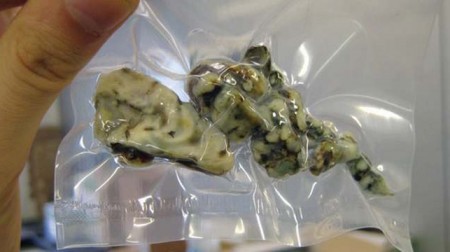
Since mountain lions live almost entirely on deer, the team checked deer fur and found the same pattern, with more mercury in coastal animals. Most leaves held little methylmercury, the most toxic form and the one that builds up in food webs, so the researchers turned to long-lived lichens. Lichens have no roots and take in whatever drifts past them, and the coastal samples contained about ten times more methylmercury than inland ones. That pointed to the fog. A researcher who had once wondered what was in the droplets soaking him on a bike ride to UC Santa Cruz helped collect fog samples, and the lab's surprisingly high readings were rerun and confirmed. The film also shows the patient fieldwork involved, since fog is hard to study when it will not arrive on demand.
The film then widens its view to the sources of the contamination. Mercury came from historic gold and silver mining, including California mines such as New Almaden and New Idria, and later from coal burning, which raised concentrations five to ten times above earlier levels. It travels high into the atmosphere, falls back into the ocean with rain and snow, and can return to the air where upwelling water meets forming fog. Scientists in the film stress that there is no "away" for mercury, which keeps recycling around the planet. One recalls a global mercury conference where a United Nations representative credited solid science for helping win ratification of the Minamata Convention, the treaty limiting mercury emissions. The film closes by reflecting that the people once nicknamed "fog eaters" are, in a sense, all of us, bound up in the pollution we have made.
- Country
- United States
- City
- San Francisco
- Language
- EN
- Source
- Vimeo
- Director
- Kyle Baker